
A few months ago, something strange appeared in the analytics of a handful of our clients. Their direct traffic was climbing fast.
Direct traffic usually means someone came straight to your website. No Google search. No ad. No obvious link from anywhere else. That kind of visit is unusual because the person likely already knew about you, and what they needed to find on your website. So when direct traffic starts rising across very different businesses — in industries as varied as dental care, finance, and retail — it is worth asking how all these people already knew where to go.
There are a couple of practical explanations to consider. One is traditional word-of-mouth, where your existing clients share your services directly with others. The other explanation, and one we suspect is playing a larger role lately, involves AI. People are asking tools like ChatGPT, Perplexity, Claude, or Gemini for a recommendation, then going straight to the source afterward.
The numbers are what made us pay attention. Across ten different client accounts:
- Direct traffic grew an average of 130% year-over-year
- Organic search traffic over that same window grew by an average of 30%
That gap matters. Direct traffic is outpacing search engine traffic by roughly 4-to-1.
The data does not explain the whole story on its own, but it does raise the right question: if you’re being surfaced by AI platforms, how does the customer’s journey change?
What’s our hypothesis? By the time a customer lands on your site, they may no longer be forming a first impression. They are simply checking whether what they already heard about you is true.
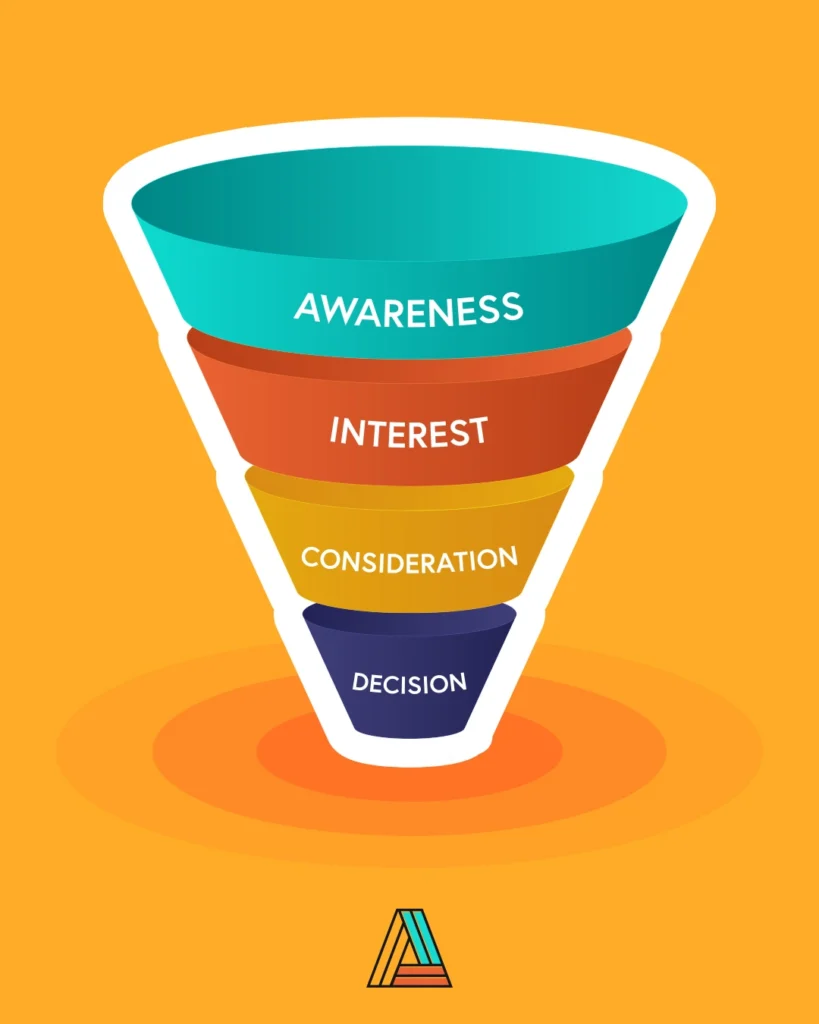
First, What Is the Customer Journey?
A customer journey is the path someone moves through before they choose to buy from you. The customer journey is usually described in five stages:
- Awareness: Recognizing a specific problem needs to be solved.
- Consideration: Looking at different ways to fix that problem.
- Decision: Narrowing the options down to a short list.
- Purchase: Choosing and buying the product or service.
- Loyalty: Returning the product or recommending the business to other people.
For a long time, marketing meant creating information for each stage and walking a stranger through them. That worked because comparing services required manual effort: searching, clicking, reading, and weighing options.
That is the part that appears to be changing.
The Invisible Consideration Stage
The consideration stage used to take real effort. A buyer would typically open 10 browser tabs, try a handful of search terms, and spend an evening visiting the top-ranked pages on a search engine to find options that resonate with them.
AI has not replaced the whole customer journey, but it is starting to compress the comparison process. We’ve written before about how AI search is changing visibility; this is the next layer: how AI may be changing the customer journey before someone reaches your site. Some customers now ask AI tools to build the shortlist before they ever reach you.
We are not at the point where AI has replaced shopping altogether. But for some buyers, it is already changing how they compare options before they buy. This shift changes how the path to your online funnels functions. The early steps no longer always run through your own website first; they may instead run through whatever an AI tool surfaces about you.
Your customer isn’t getting to know you through your homepage. They are getting to know the version of you that an AI tool gave them, and trusting that it did its homework.
The Reporting Blind Spot in Your Analytics
Here is the practical effect for a business owner: by the time someone actually picks up the phone or submits a form, they are usually not calling to learn what you do. They already know. They have read a summary of your services, compared you to a few competitors, and shown up with a well-formed opinion already in hand.
The website visit or the initial call is no longer where the relationship starts. It is where they check if what they were told is actually true.
That creates a real tracking problem. A good analytics setup can usually trace a customer’s path step by step: what page they landed on, what they clicked, and how many visits it took before they converted. But a growing chunk of that early research is now happening inside someone else’s chat window, somewhere your dashboard cannot see, and through an algorithm that changes from person to person.
On top of these limitations, the foundational tools that track web activity have not caught up to these changes:
- Google Analytics Referrer Data: Google Analytics added a channel meant to flag traffic from platforms like ChatGPT, Gemini, and Claude. However, a large share of those visits still arrive without any referrer data and land in the “Direct” traffic bucket.
- AI Overview Metrics: Clicks from features like Google’s AI Overviews sometimes appear as regular organic clicks on your search dashboard, with no built-in way to segment them separately.
If your traffic numbers haven’t shown anything unusual, that is not absolute proof that nothing has changed. It may mean your tools were not built to see this kind of visit yet. Not in a robots-taking-over way, but more in a “your analytics missed the meeting” way.
A Pattern Worth Paying Attention To
To examine this blind spot in action, we can use a version of these numbers based on our own site traffic rather than a client’s.
When we compared our own site traffic from 2025 to 2026, branded searches for “AlchemyThree” grew roughly 28%. Direct traffic, meanwhile, increased by 218%!
If most of that direct traffic were just traditional word of mouth (people hearing our name and then looking us up), branded search would have grown at close to the same rate as direct traffic. It didn’t come close. Direct traffic grew significantly faster than the search terms that should be tracking right alongside it.
Word of mouth usually shows up in those search metrics. The fact that it isn’t there suggests that a real share of that traffic skipped the search engine entirely. This does not prove every direct visit came from AI, but it does suggest that more of the customer journey may be happening somewhere traditional analytics cannot fully see.
What Your Marketing Needs to Do Before the Click
It is tempting to respond to these changes by polishing the parts of the customer journey you can still see clearly, such as a smoother checkout page, a faster proposal template, or reduced friction once someone arrives.
While those are good baseline practices, that is not where the primary leverage is anymore. A frictionless purchase path doesn’t help if you never made the shortlist in the first place. The attention that used to go toward simply filling the top of the funnel needs to shift toward becoming the kind of business that actually gets recommended in hard-to-track conversations.
In practice, that means focusing on proof and original value that competitors cannot easily copy:
- Real client results: Track and share original process data and concrete client outcomes consistently enough that you can make specific claims nobody else can copy (like we’ve done with the data in this blog).
- Reviews and testimonials: Collect honest reviews and specific testimonials on a regular schedule, not just occasionally.
- Original points of view: Build content from work you have actually done, rather than publishing basic summaries of what everyone else in your industry has already said.
This is the kind of depth an AI model cannot create from scratch. It can summarize a generic listicle, but it cannot invent your actual client outcomes.
One honest caveat to keep in mind is that this shift isn’t instant — AI tools do not all update or source information the same way, so something you publish today may not influence an AI recommendation right away. That is a reason to start building that depth now, rather than waiting.
If this is happening in your market (and honestly, we’re seeing this across all markets), your marketing needs to be built for the conversation before the click.
If half your customers are making up their minds before they ever call you, and your own dashboard cannot fully confirm where that decision started, the conversation you are optimizing for might already be over by the time it begins. You might not find out until the numbers move.
Frequently Asked Questions
The customer journey is the path someone takes from realizing they have a problem to deciding who they trust to solve it. It usually includes five distinct stages: awareness, consideration, decision, purchase, and loyalty.
AI is shifting where the consideration stage occurs. Instead of a buyer manually researching dozens of web pages and comparison sites, some customers now ask AI tools to summarize, compare, and recommend options before they ever visit a business’s homepage.
Direct traffic spikes can stem from multiple channels, including traditional word-of-mouth, untagged marketing links, bookmarks, and browser privacy filters. A sudden rise in direct visits does not prove that AI tools are the only cause, but it aligns with a pattern in which buyers conduct their early evaluation in private chat windows that analytics dashboards cannot track.
Yes, but the nature of the work is evolving. Rather than solely aiming for basic keyword rankings, businesses need clear service pages, specific proof from real client work, unique industry viewpoints, and a steady flow of verified reviews. This helps both human readers and AI tools understand why your business belongs on the shortlist.