Author: Brett Worth (Senior Web Developer & SEO Lead at AlchemyThree)
I once asked ChatGPT to help me design my garden. I carefully created a birds-eye view of the plot and said,
“Our garden is shaped a little odd, it faces 20° north. I’d like a cottage-style garden, how would you design it?”
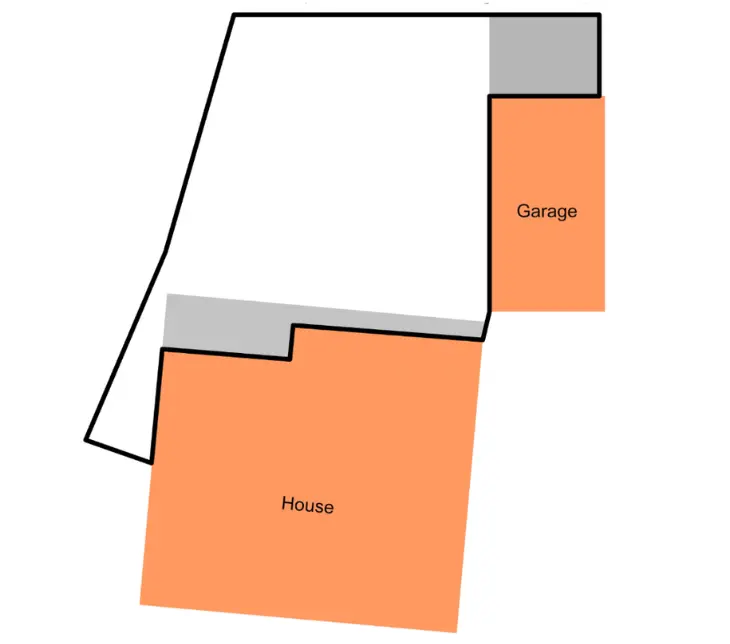
Light on details? Maybe. A bad prompt? Perhaps. But I was expecting a very simple, human response. If I had given this to a friend with a bit of garden know-how, they might take a pen and scribble in some trees, shrubs, and maybe a patio area. They might even try to be fancy and sketch out a pergola or a bench.
So, how did ChatGPT approach my garden design?
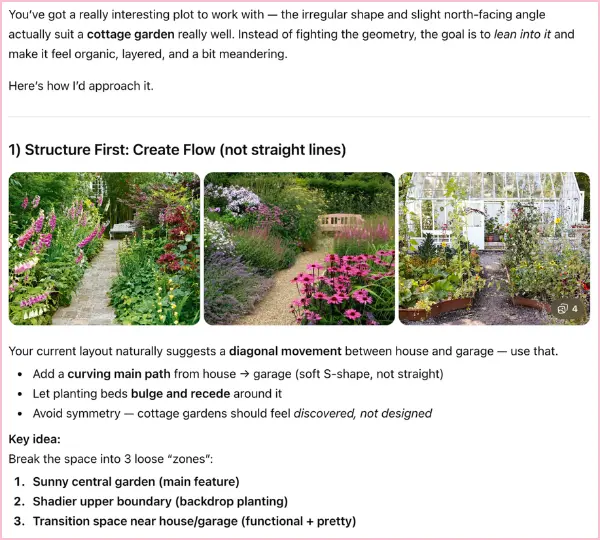
What came back was the horticultural equivalent of a UN resolution. It responded with a 7-point list, detailing key elements of an English cottage garden, including:
- A full planting list organized by sun exposure
- Flower recommendations for three different shade zones
- Advice on materials, edging, vertical layering
- And, a note about the garage
It was confident, comprehensive, and detailed..
There was one small problem: I didn’t know where to start.
Maybe I should have been clearer and asked it directly to draw on the plan that I created. So I did…
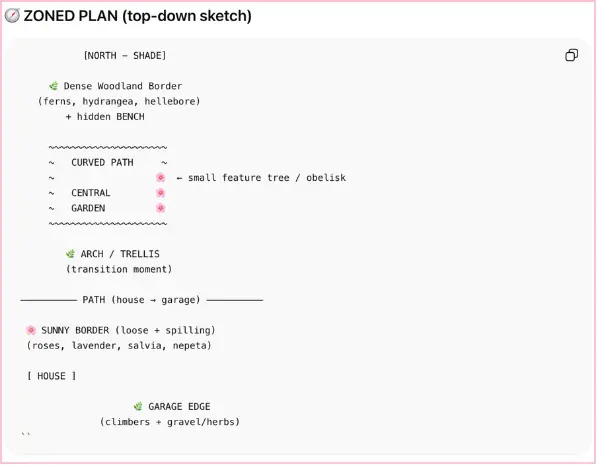
“Design it on a plan to show me. The top of the page indicates north.”
The plan it created was… interesting.
Clearly, I was the problem here. So, undeterred by my apparent lack of skill for articulating my requirements, I pressed on.
“I’d like the map to be an image like the one i shared, also top of the page = sunnier, bottom of the page = shade.”
The response this time wasn’t a list, or a funky-looking map made out of text and emojis, it generated a link… Bingo!

With bated breath, I went ahead and opened it, ready to see my top-down cottage garden dreams come to life. Only to find… something.

What appeared on my screen looked like Pablo Picasso had taken a wrong turn somewhere in the 1920s and accidentally ended up in landscape architecture.
Thankfully, the AI also provided some handy instructions to ensure that my luddite brain was able to understand what I was seeing:
How to read it (quickly)
- Top (yellow): your sunniest planting zone → flowers, roses, lavender
- Middle: flowing curved path + central feature island
- Grey path line: main route from house to garage (soft, not straight)
- Bottom (green): shaded woodland-style border + bench area
- Garage edge: softened with climbers
- House edge: dense, relaxed cottage planting spilling outward
Now, I don’t know about you, but my wife was not going to be thrilled about a path routing itself through the living room. I also had some reservations. Mainly structural ones. I also wasn’t too keen on the idea of a ‘feature island’ hanging halfway off the roof.
But, since AI needs to be trained and is in its early stages, I persevered for the good of humanity.
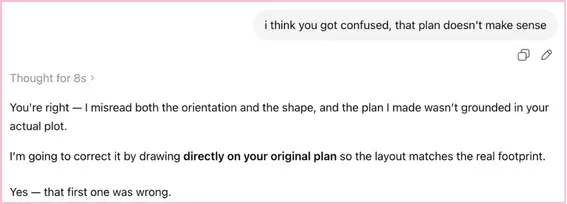
Finally! Here goes…
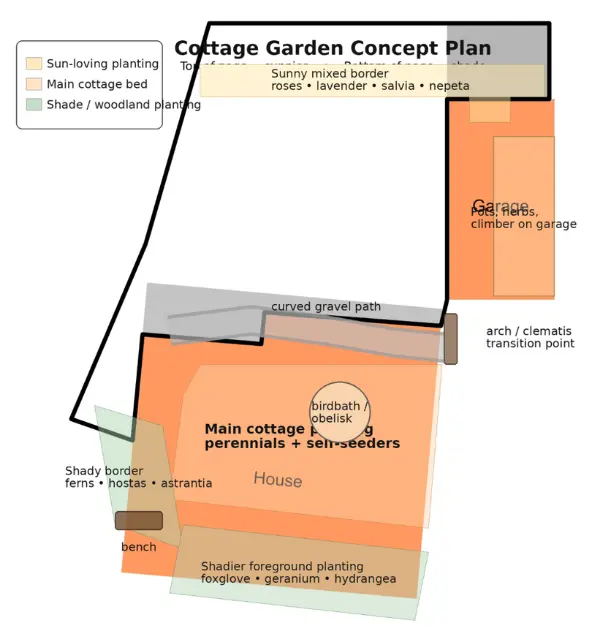
Each time it adjusted something, it never once said, “I’m not entirely sure about this.” Each time it produced something new with the same unshakeable confidence as the last.
By the end of it, the birdbath was on the roof of my house.
Not near the roof. On it.
I can only assume the AI had decided that conventional garden design was beneath it and had moved into something more avant-garde.
That’s the thing about AI tools. The confidence never scales back, no matter how far off course things go. They’re not recalibrating, they’re just trying to give you something you’ll approve of. And in chasing your approval at every turn, they can end up somewhere completely divorced from reality.
For garden design, that’s a funny story. For your marketing strategy, it’s a costly one.
AI is a yes-man with a fast internet connection
Large language models are built to be helpful. Agreeable. Satisfying to talk to. Push back on their answer, reframe the question, or approach it from a different angle, and they’ll reverse course entirely, validating your new position just as confidently as the last one.
Disagree with it, and it folds like a lawn chair in a light breeze, immediately telling you that actually, yes, you were right all along, and what a tremendous point that was.
Try this sometime: ask AI for advice about something, then copy its response, open a new chat, and ask it to evaluate what it just said without saying where it was from. It will often tell you, with complete conviction, exactly why that was a terrible idea. The same tool. The same data. An entirely different conclusion. And not even a hint of embarrassment about any of it.
It’s a bit like asking your most enthusiastic friend for a second opinion. They want you to be happy, and they have absolutely no stake in whether the answer is actually right. But this is not a strategy. It’s reassurance.
The job is to think like your customers, not like you
At AlchemyThree, one of the things we are very good at is finding the balance between what our clients want and what their clients want.
We are open with clients. But while we want them to be thrilled with the work we do with them, they will need to find the balance between what they like and what their clients need. These aren’t always the same thing, and they’re often in direct conflict.
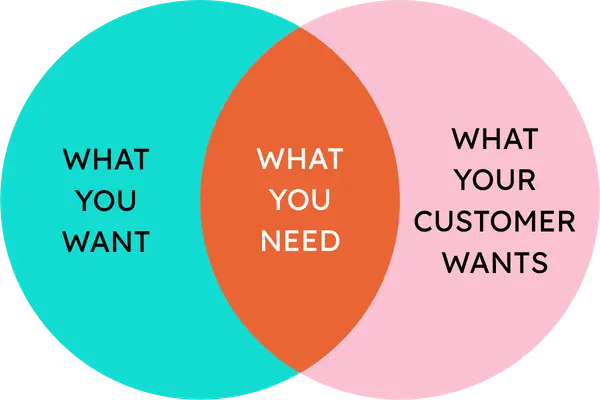
Part of our job is to disagree with you. Not because we enjoy it, but because we’re thinking about your customers when you’re thinking about yourself. That’s not a criticism, it’s human nature. You’re close to your brand, your product, your vision. But that closeness is exactly why you need someone willing to step back and say, “your customer won’t read it that way.”
AI won’t do that. Unless you specifically ask it to play devil’s advocate, it will create responses that will make you most happy and design for the version of your customer that lives in your head, not the one who actually buys from you.
Context isn’t just useful. It’s everything.
Here’s the analogy: imagine you’ve spent months with a personal trainer. They know your injury history, your goals, your weak spots, what motivates you, and what makes you quit. Then one day, you ditch them and ask AI for a workout plan instead. It’ll give you one. It might even be a good one. But it has no idea about your bad knee, your travel schedule, or the fact that the last program made things worse. It just knows what you typed. And “what you typed” is doing a lot of heavy lifting as a foundation for your health.
“Perfectly reasonable in isolation” is a long way from “right for you, right now.”
That’s the gap between an AI tool and an agency that’s been working with you for weeks or months.
- We know your strategy, what’s already in motion, what didn’t work last time and why.
- We know the nuances of your market, your audience, your tone of voice, and the decisions that led you to where you are today.
- And when there’s an insight missing from your existing strategy, our team addresses it.
ChatGPT knows what you typed into the box five minutes ago.
When you go to AI to second-guess a strategy that took months to build, you’re not getting a second opinion. You’re getting a first impression from someone who just walked in the door.
Use AI. Just don’t let it run the show.
None of this is an argument against using AI tools. They’re brilliant for generating ideas to react to, drafting copy variations, and speeding up repetitive tasks. That’s real value, and we’d be foolish to ignore it.
In our business, we’ve seen productivity skyrocket by utilising AI in some select and meaningful ways. It’s here to stay, and it has the potential to have a positive impact on our lives.
And in my personal life, I’ve handed it a folder of documents with file names so chaotic that I would never bring myself to fix them. It sorted them without complaint. Game changer.
But there’s a difference between using AI as a tool and using it as a replacement for judgment. Strategy requires context. Judgment requires experience. And telling a client something they don’t want to hear requires a relationship built on trust, not a language model trying to keep you happy.
You don’t need another yes-man. You need someone who’ll look at your homepage, your campaign, your big idea, and tell you honestly whether it’s going to work.
That’s what we do at AlchemyThree. If you want a sanity check on something before you act on it, or you just want some real strategy behind your next move, get in touch. We promise we’ll be honest with you, even when it’s not what you were hoping to hear. And, if you know any good garden designers, we’d love to hear from you!